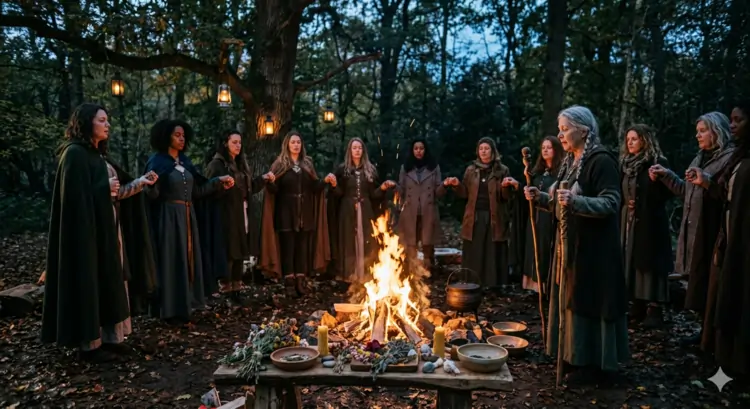
Introduction
For thousands of years, humanity has looked to the sky and the changing seasons for guidance, meaning, and spiritual connection. Long before modern calendars existed, the cycles of the Sun and Moon governed daily life, agriculture, celebrations, and sacred traditions.
In Pagan, Wiccan, and many modern spiritual paths, two important cycles are honored throughout the year: the Sabbats, which follow the solar cycle, and the Esbats, which follow the lunar cycle.
The Sabbats form the Wheel of the Year, a sacred calendar consisting of eight seasonal festivals that mark the journey of the Sun through the changing seasons. Esbats, on the other hand, are lunar celebrations held during the Full Moon, offering opportunities for reflection, manifestation, divination, and spiritual growth.
Together, these observances help practitioners reconnect with nature, align with cosmic rhythms, and deepen their understanding of life's continual cycles of birth, growth, death, and rebirth.
Understanding the Wheel of the Year
The Wheel of the Year is composed of eight Sabbats that divide the annual cycle into meaningful seasonal milestones.
These include:
- Four Solar Festivals (the Solstices and Equinoxes)
- Four Cross-Quarter Festivals rooted primarily in ancient Celtic traditions
Each Sabbat represents a stage in the eternal cycle of nature, mirroring the journey of life itself.
Samhain (October 31st)
The Spiritual New Year
Samhain (pronounced Sow-in) is often considered the most important Sabbat of the year. It marks the end of the harvest season and the beginning of the darker half of the year.
Ancient Celts believed that during Samhain, the veil between the physical world and the spirit realm became especially thin, allowing communication with ancestors and departed loved ones.
Symbolism
- Death and rebirth
- Transformation
- Ancestor connection
- Reflection
- Endings and new beginnings
Spiritual Energy
Samhain encourages deep introspection. It is a time to release what no longer serves you and prepare for a new cycle of personal growth.
Ways to Honor Samhain
- Create an ancestral altar
- Light candles in remembrance of loved ones
- Practice meditation or shadow work
- Write down what you wish to release and safely burn the paper
Yule (Winter Solstice)
The Return of the Light
Celebrated around December 21st, Yule marks the longest night and shortest day of the year.
Although darkness reaches its peak, Yule celebrates the rebirth of the Sun and the gradual return of light.
Symbolism
- Hope
- Renewal
- Rebirth
- Inner strength
- The triumph of light over darkness
Spiritual Energy
Yule reminds us that even in our darkest moments, light is already beginning to return.
Ways to Honor Yule
- Decorate a Yule tree
- Burn a Yule log
- Exchange gifts
- Practice gratitude rituals
- Light candles throughout the evening
Imbolc (February 1st–2nd)
The Awakening of Spring
Imbolc is associated with the Celtic goddess Brigid and marks the first signs of spring beneath the frozen earth.
Though winter still lingers, nature begins quietly preparing for renewal.
Symbolism
- Purification
- Inspiration
- Creativity
- New beginnings
- Spiritual awakening
Spiritual Energy
Imbolc encourages fresh ideas, renewed motivation, and clearing away stagnant energy.
Ways to Honor Imbolc
- Clean and bless your home
- Light white candles
- Begin a new creative project
- Work with intentions for the coming months
Ostara (Spring Equinox)
Balance and Renewal
During Ostara, day and night are equal in length, creating a perfect balance between light and darkness.
Nature bursts into life as flowers bloom and animals emerge from winter rest.
Symbolism
- Fertility
- Renewal
- Growth
- Balance
- New opportunities
Spiritual Energy
Ostara is a powerful time for planting seeds—both literally and symbolically.
Ways to Honor Ostara
- Plant flowers or herbs
- Decorate eggs
- Spend time outdoors
- Set goals for personal growth
Beltane (May 1st)
The Celebration of Life and Passion
Beltane marks the beginning of the bright half of the year. Traditionally celebrated with bonfires, it honors fertility, passion, and the abundance of life.
Symbolism
- Love
- Fertility
- Creativity
- Vitality
- Union of divine energies
Spiritual Energy
Beltane radiates joy, passion, and vibrant life force energy.
Ways to Honor Beltane
- Dance around a bonfire
- Create flower crowns
- Celebrate relationships
- Perform prosperity rituals
- Connect with nature
Litha (Summer Solstice)
The Sun at Its Peak
Litha occurs around June 21st and celebrates the longest day of the year.
The Sun reaches its maximum power, illuminating the world with warmth and abundance.
Symbolism
- Success
- Abundance
- Power
- Achievement
- Solar energy
Spiritual Energy
Litha encourages confidence, gratitude, and recognition of personal accomplishments.
Ways to Honor Litha
- Watch the sunrise
- Gather medicinal herbs
- Host an outdoor feast
- Express gratitude for blessings received
Lughnasadh (Lammas) – August 1st
The First Harvest
Named after the Celtic god Lugh, Lughnasadh celebrates the first harvest and the rewards of hard work.
Symbolism
- Gratitude
- Sacrifice
- Achievement
- Harvest
- Prosperity
Spiritual Energy
This Sabbat encourages appreciation for everything you have cultivated throughout the year.
Ways to Honor Lughnasadh
- Bake homemade bread
- Reflect on personal achievements
- Share food with loved ones
- Offer thanks for abundance
Mabon (Autumn Equinox)
The Second Harvest
Mabon marks another moment of balance as day and night become equal once again.
It is a time of thanksgiving and preparation for the introspective season ahead.
Symbolism
- Gratitude
- Balance
- Reflection
- Completion
- Harvest
Spiritual Energy
Mabon encourages slowing down, appreciating accomplishments, and preparing for the inward journey of winter.
Ways to Honor Mabon
- Keep a gratitude journal
- Enjoy seasonal foods
- Spend time in nature
- Reflect on lessons learned during the year
Esbats: Celebrating the Full Moon
While Sabbats honor the Sun's journey through the seasons, Esbats focus on the Moon and its powerful influence.
An Esbat is traditionally celebrated during the Full Moon, when lunar energy is believed to reach its peak.
Many practitioners use Full Moon rituals for:
- Manifestation
- Spiritual development
- Divination
- Meditation
- Energy work
- Releasing negativity
The Full Moon represents completion, illumination, and heightened intuition.
The 13 Full Moons and Their Spiritual Meanings
Each Full Moon carries unique symbolism connected to seasonal changes and ancient traditions.
January – Wolf Moon
Symbolism
- Survival
- Resilience
- Inner strength
Energy
A time to embrace courage and trust your instincts.
February – Snow Moon
Symbolism
- Patience
- Purification
- Endurance
Energy
Encourages preparation for the opportunities ahead.
March – Worm Moon
Symbolism
- Renewal
- Awakening
- Growth
Energy
Represents nature's return to life after winter.
April – Pink Moon
Symbolism
- Love
- Emotional healing
- New beginnings
Energy
Supports heart-centered growth and compassion.
May – Flower Moon
Symbolism
- Fertility
- Beauty
- Abundance
Energy
Encourages blossoming into your fullest potential.
June – Strawberry Moon
Symbolism
- Reward
- Joy
- Sweetness
Energy
A reminder to enjoy the fruits of your efforts.
July – Buck Moon
Symbolism
- Regeneration
- Strength
- Personal evolution
Energy
Promotes confidence and spiritual growth.
August – Sturgeon Moon
Symbolism
- Wisdom
- Prosperity
- Abundance
Energy
Encourages appreciation for life's blessings.
September – Harvest Moon
Symbolism
- Gratitude
- Completion
- Reflection
Energy
A time to recognize and celebrate achievements.
October – Hunter's Moon
Symbolism
- Preparation
- Protection
- Foresight
Energy
Helps prepare for transformation and change.
November – Beaver Moon
Symbolism
- Stability
- Security
- Planning
Energy
Encourages building strong foundations for the future.
December – Cold Moon
Symbolism
- Rest
- Reflection
- Inner wisdom
Energy
Supports introspection and spiritual renewal.
The Thirteenth Moon
Some years contain thirteen Full Moons instead of twelve.
This additional moon is often viewed as highly mystical and transformative.
Symbolism
- Spiritual awakening
- Hidden knowledge
- Deep transformation
- Cosmic alignment
Energy
A powerful opportunity for profound personal growth and soul-level change.
How to Celebrate an Esbat
Esbats can be simple, personal, and meaningful.
Moon Meditation
Spend time under the Full Moon reflecting on your intentions and spiritual journey.
Moon Water
Place a jar of water outside overnight to absorb lunar energy.
Crystal Charging
Cleanse and recharge crystals beneath the Full Moon.
Journaling
Record dreams, emotions, insights, and manifestations.
Divination
Use tarot cards, oracle decks, runes, or pendulums to seek guidance.
Gratitude Rituals
Express appreciation for the blessings and lessons received during the lunar cycle.
Living in Harmony with Sacred Cycles
The Sabbats and Esbats remind us that life moves in cycles. Just as nature experiences birth, growth, harvest, decline, and renewal, we too move through periods of expansion, reflection, challenge, and transformation.
By honoring the Wheel of the Year and the Full Moon cycle, we reconnect with the wisdom of the Earth and the heavens. These sacred observances encourage mindfulness, gratitude, self-awareness, and a deeper relationship with the natural world.
Whether you are a practicing Pagan, a spiritual seeker, or simply someone fascinated by ancient traditions, celebrating Sabbats and Esbats can provide a powerful framework for living more intentionally and harmoniously with the rhythms of nature.
The Sun teaches us about growth and change. The Moon teaches us about intuition and transformation. Together, they illuminate the path of spiritual evolution and remind us that every ending carries the seed of a new beginning.
Gemini, CC0,

0 comments:
Post a Comment